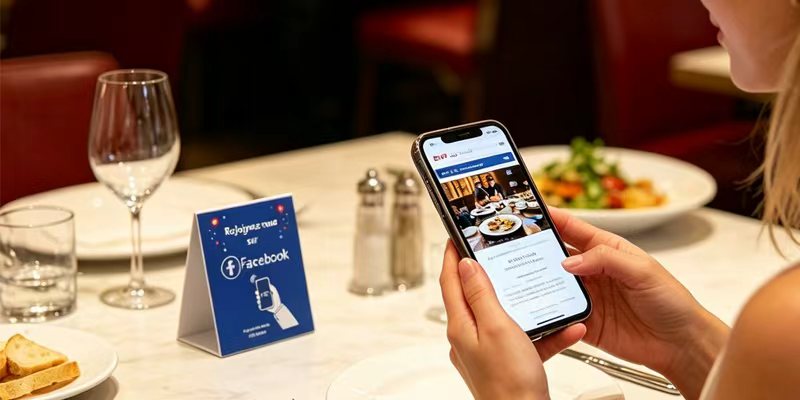
Dinner service is in full swing. A server drops the check, thanks the guests, and points to a small sign on the table: “Scan here to leave us a review.”
One guest glances at it, unlocks the phone, opens the camera, adjusts the angle, waits for the link to appear, then gives up because the lighting is poor and the code is slightly scratched. Another guest says, “I’ll do it later,” which usually means never.
Now picture the same moment with an NFC review card.
The guest taps the phone on the card. The review page opens instantly. No camera. No awkward angle. No guessing where to scan. Just one smooth motion that feels natural.
That difference may seem small. In a restaurant, small moments decide whether a customer takes action or moves on.
NFC review cards give restaurants a faster, cleaner, and more modern way to collect reviews than QR codes placed on tables. They reduce friction, protect the dining atmosphere, and make feedback part of the experience instead of an extra task.
Why this matters more than most restaurants realize
Most restaurants do not struggle because guests dislike them. They struggle because even happy guests rarely want to do extra work.
That is the real problem.
A customer may love the food, enjoy the service, and fully intend to leave a five-star review. Then the request comes at the end of the meal, when attention is low and everyone wants to leave. At that point, every added step hurts conversion.
In my experience, the most effective review tool is not the one with the most features. It is the one that asks the least from the guest.
That is where NFC stands out.
What is an NFC review card?
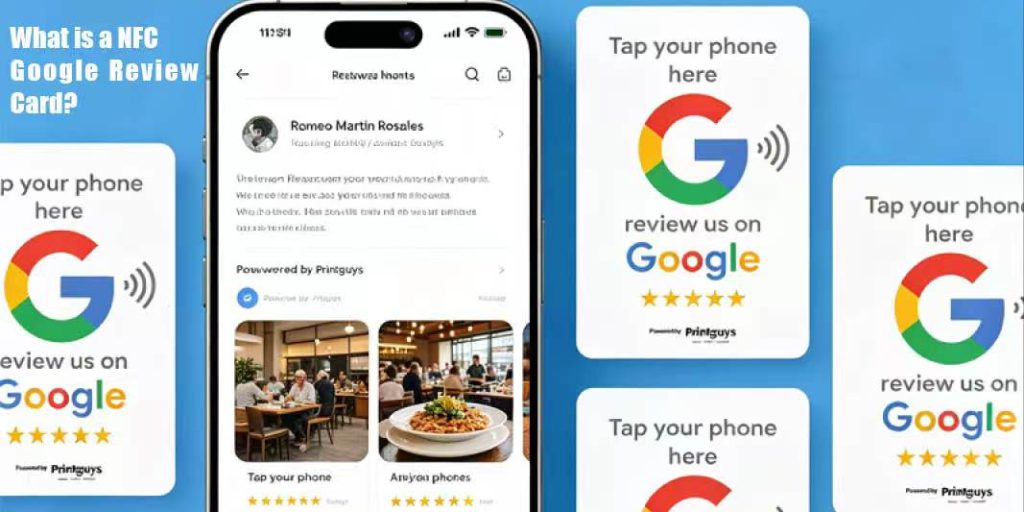
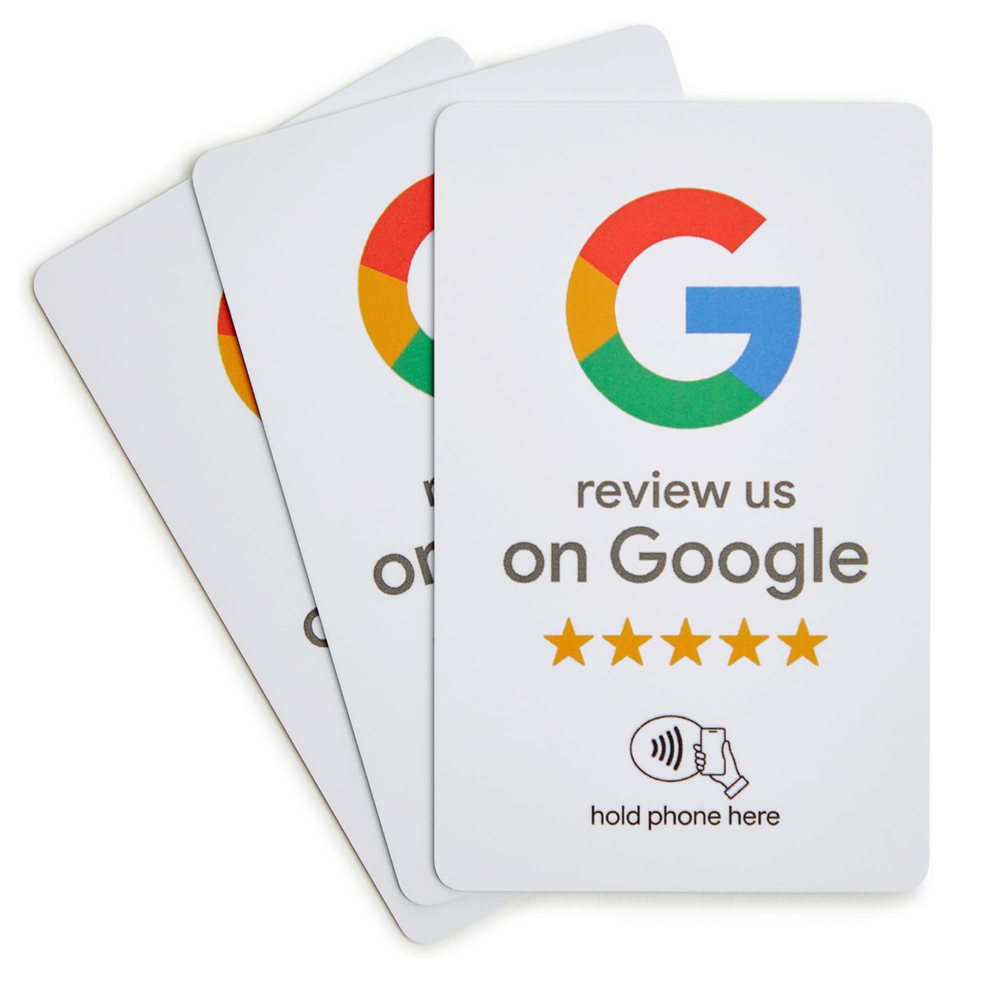
An NFC review card is a small card, stand, or table display with an embedded NFC chip. When a guest taps it with a compatible smartphone, the phone opens a preset link automatically, usually to a Google review page, feedback form, loyalty page, or landing page.
It feels simple because it is simple.
Unlike a QR code, NFC does not ask the guest to line up a camera, wait for focus, or deal with glare, stains, folds, or poor print quality. The action is closer to how people already use contactless technology in everyday life.
For restaurants, that matters. A review request should feel effortless, not technical.
QR codes are common. Convenient is another story.
QR codes became popular because they were cheap and easy to print. Menus, payments, promotions, and reviews all started competing for the same square of table space.
The issue is not that QR codes do not work. The issue is that they often add just enough friction to reduce action.
Here is what happens with table QR codes in real life:
- Guests need to unlock their phone
- They have to open the camera or scanner
- They must position the phone correctly
- Reflection, low light, or damaged print can interrupt the process
- Some guests hesitate because they do not trust random codes
- Others simply do not want to interact with visual clutter during a meal
Each of these steps seems minor. Put them together, and the review request loses momentum.
Restaurants live on momentum. When the experience is warm and immediate, people respond. When the experience feels like work, they postpone it.
Why NFC review cards feel easier to guests
The biggest advantage of NFC is not novelty. It is less effort.
A guest does not need instructions beyond “Tap here.” That matters because the best restaurant technology disappears into the experience. It does not force customers to stop, figure something out, and re-engage.
1. Tap feels faster than scan
A tap is a cleaner action than a scan.
It works well in low light. It works even when the table is crowded. It works without holding the phone above the display and waiting for the camera to focus. The guest gets to the review page with fewer interruptions.
That speed can make the difference between an immediate review and an abandoned intention.
2. It feels more premium
Restaurants invest heavily in plating, interiors, uniforms, and table presentation. Then many of them place a printed QR tent on the table that looks temporary, generic, or promotional.
An NFC review card can feel far more intentional.
A well-designed card with brand colors, a clean finish, and a simple call to action fits the dining environment better. It feels less like an advertisement and more like part of the service design.
For brand-focused operators, this is a serious advantage. Guests notice details, especially in hospitality.
3. It reduces visual noise on the table
Tables are already busy. Menus, specials, condiments, table numbers, payment prompts, and promotional materials can quickly crowd the experience.
QR codes add visual demand. They need to be visible, printed clearly, and often supported by explanatory text. NFC can do more with less.
A minimal review card with a subtle “Tap to Review” message keeps the table cleaner while still inviting action.
That balance matters when restaurants want to stay approachable without looking cluttered.
Why your staff will like NFC too
The guest experience is only one side of the equation. Staff behavior shapes whether review tools actually get used.
Servers are much more likely to point out a tool that feels easy to explain.
With a QR code, the instruction can sound awkward:
“Please scan this code with your camera if you’d like to leave a review.”
With NFC, the message feels natural:
“Just tap your phone here if you’d like to leave us a review.”
That difference helps in busy service environments. Staff do not need to over-explain. Guests understand quickly. The interaction feels modern instead of mechanical.
Professional advice: the easier a tool is for staff to mention in one sentence, the more consistently it gets used.
Three moments where NFC review cards outperform table QR codes
1. At the end of a positive dining experience
This is the most important review window.
The food was good. The service landed well. The guest is satisfied right now. Restaurants need a review method that captures that moment before it fades.
NFC works because it matches the pace of the moment. Tap, open, review.
There is no need to ask guests to slow down and complete a mini tech task before they leave.
2. In low-light or ambiance-driven spaces
Bars, lounges, fine dining rooms, and design-led restaurants often use lighting that makes QR scanning less convenient. Even when scanning still works, it feels less seamless.
NFC is better suited to these environments because it does not depend on camera visibility in the same way. That makes it a stronger fit for brands that care deeply about atmosphere.
3. In high-turnover service environments
Fast casual restaurants and busy café concepts need review collection tools that do not disrupt flow.
When customers are moving quickly, every second matters. NFC gives them a shorter path from prompt to action. It also reduces the chance that they walk away planning to review later and never return to the task.
But are QR codes still useful?
Yes. QR codes still have practical value.
They are inexpensive, familiar, and compatible with nearly every smartphone camera. For some restaurants, especially those starting with a very tight budget, QR codes remain an accessible option.
That said, accessibility is not the same as effectiveness.
If the goal is simply to have a review link on the table, QR codes can do the job. If the goal is to create a smoother, more premium, more guest-friendly interaction, NFC usually offers a better experience.
The decision comes down to what kind of brand experience the restaurant wants to create.
What makes NFC review cards a smarter long-term choice
Restaurants that think beyond the table sign tend to see NFC differently. They do not view it as just a review trigger. They view it as part of a broader guest touchpoint strategy.
An NFC card can support:
- Google review collection
- Private feedback forms
- Loyalty sign-ups
- Promotional landing pages
- Menu links
- Social follow prompts
- Multi-link brand experiences
That flexibility makes NFC more adaptable over time. A printed QR code often feels fixed. An NFC-enabled solution can be updated more easily depending on the setup, campaign, or brand goal.
For operators and marketers, that means one physical touchpoint can continue working even as the campaign changes.
What should restaurants look for in an NFC review card?
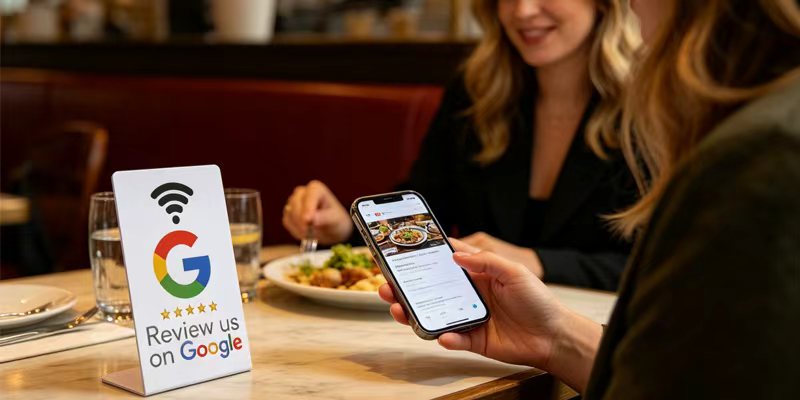
Not every NFC product performs the same way in a real hospitality setting. Restaurants should think beyond appearance alone.
Here are the essentials:
- Fast and reliable tap response
- Durable materials for daily handling
- Clean branding that matches the venue
- Simple call-to-action wording
- Compatibility with common smartphones
- Flexible link options for future campaigns
In my experience, design matters almost as much as function. A card that technically works but feels cheap or visually out of place will not support the brand the way it should.
A restaurant review card should feel like it belongs on the table.
Why guests are more likely to respond
Guests do not leave reviews because restaurants ask. They leave reviews because the request arrives at the right moment in the easiest possible format.
That is the strength of NFC.
It respects the guest’s time. It feels current. It reduces hesitation. It fits naturally into the final moments of service without turning the table into a mini instruction zone.
And that creates something every restaurant wants: less friction between satisfaction and action.
The simpler the path, the better the chance the guest actually follows it.
The real takeaway
NFC review cards are not better than QR codes because they look newer. They are better because they remove effort from a moment that already has very little attention to spare.
For restaurants, that means:
- A more elegant table presentation
- A smoother guest interaction
- An easier prompt for staff
- A better chance of turning happy diners into public advocates
That is why more operators are starting to see NFC review cards not as a nice extra, but as a practical hospitality tool.
When every guest interaction shapes reputation, convenience stops being a small detail. It becomes part of the strategy.
Restaurants that want more reviews without adding friction should start with one simple question: does the review request feel as smooth as the dining experience itself?
If the answer is no, NFC review cards deserve a closer look.
Want to explore how NFC review cards can fit your restaurant brand, table setup, or guest feedback strategy? Join the conversation around smarter hospitality touchpoints built for real customer behavior.